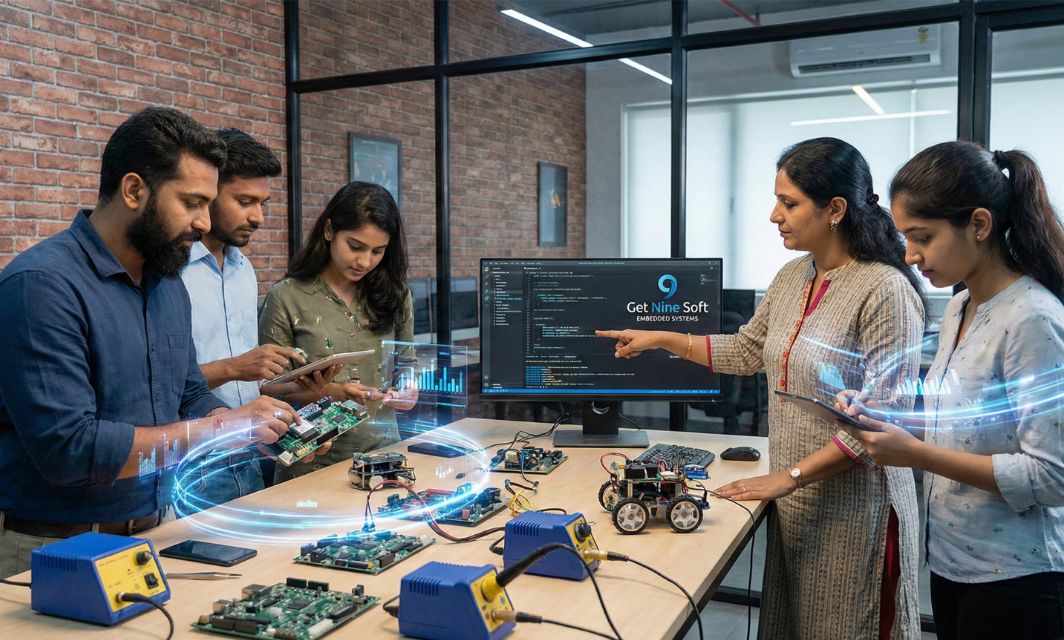
Embedded
Systems

Embedded systems silently power countless devices we use every day — from smartphones and home appliances to vehicles, medical tools, and industrial machinery.

These specialized computing units are designed to perform dedicated tasks within larger systems, making them essential to the reliability, intelligence, and functionality of modern technology.

  • Microcontroller Programming
  • Firmware Development
  • Hardware–Software Integration
  • IoT Device Architecture
  • Real-Time System Design
image
Designed for
Seamless Efficiency

Whether you’re a startup or industry star, we’re here to elevate your brand with creative research and real human-centred software design

05
01

Purpose-Built Performance

One of the biggest strengths of embedded systems is their ability to deliver highly optimized performance for specific tasks. Unlike general-purpose computers, they execute focused operations with precision and often operate in real-time, reacting instantly to environmental changes. This makes them indispensable in:

  • Robotics
  • Industrial automation
  • Aerospace systems
  • Safety-critical control units
02

Engineering for Efficiency & Reliability

Embedded systems are designed to operate under strict hardware constraints. They often run on lightweight operating systems — or even bare-metal frameworks — requiring:

  • Expert low-level programming
  • Deep understanding of memory management
  • Precise timing and hardware behavior
  • Efficient resource utilization

Languages like C, C++, and Assembly are commonly used due to their performance and hardware-level control.

03

Embedded Systems Across Industries

Advancements in embedded technology have enabled groundbreaking innovation in multiple industries.

  • Automotive: ADAS, engine control units, infotainment, autonomous systems
  • Healthcare: Pacemakers, ventilators, infusion pumps, diagnostic equipment
  • Industrial: Automation controllers, predictive maintenance, machine-to-machine communication

These systems enhance efficiency, improve safety, and enable intelligent automation.

04

Embedded Systems & Future Technologies

The future of embedded systems is deeply connected with emerging fields such as:

  • Internet of Things (IoT)
  • Artificial Intelligence (AI)
  • Smart infrastructure
  • Connected automation ecosystems

Embedded devices are becoming smarter, more connected, and more autonomous — shaping the next evolution of digital transformation.

05

The Core of Digital Innovation

Embedded systems combine hardware and software into powerful, purpose-built solutions. From everyday devices to mission-critical systems, they improve safety, convenience, and performance — ultimately shaping a smarter and more interconnected world.